The Halftime Show Understood the Assignment

The SuperBowl’s first hip-hop halftime show was an incredible celebration of blackness– black joy, black creativity, black culture– but it was also a stinging indictment of the framework surrounding that blackness. The show was jammed with layers of meaning, and those meanings deserve to be unpacked and parsed.

Time and Place
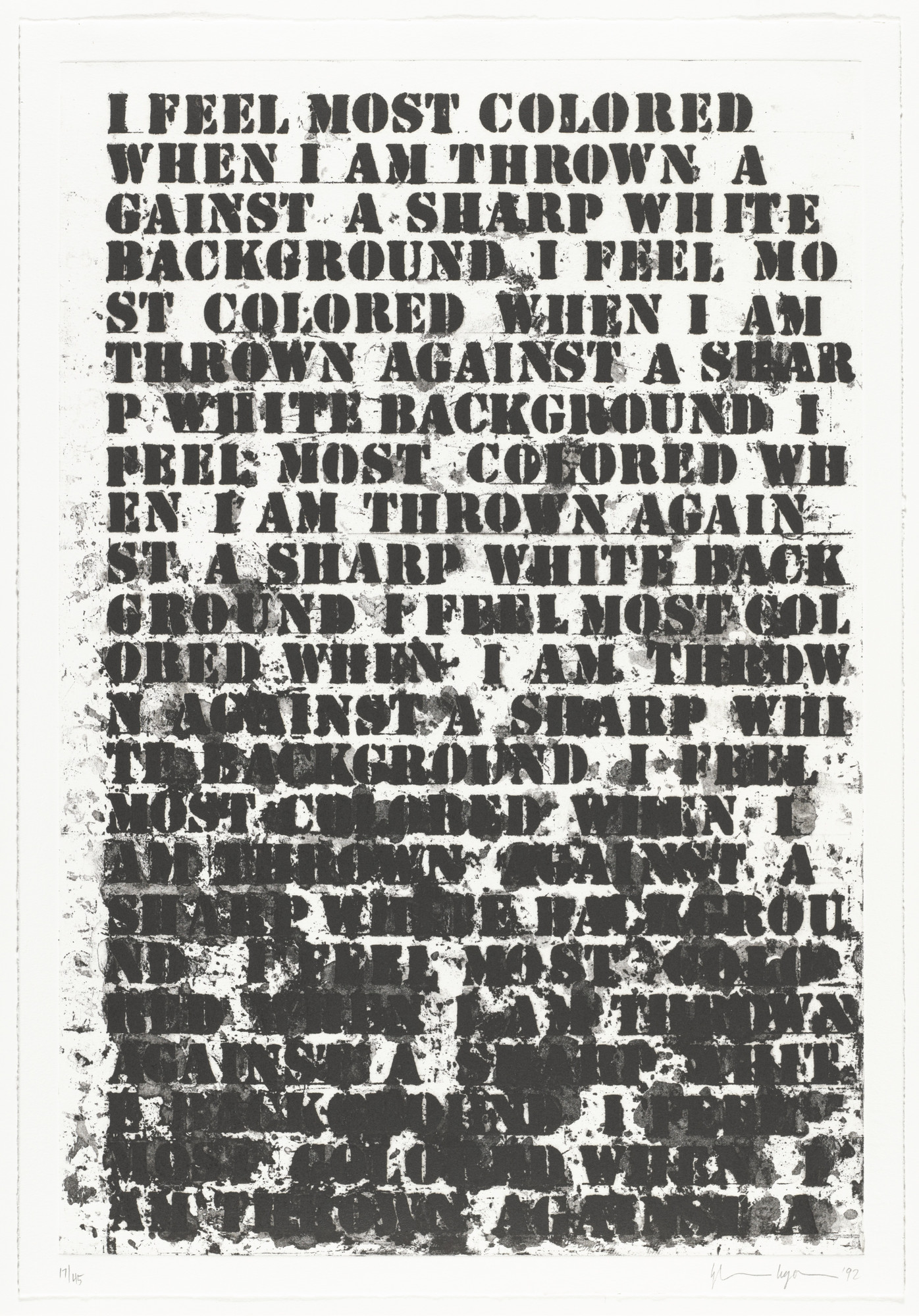
The first thing I noticed about the set was its stark whiteness. It immediately brought to mind the Zora Neale Hurston quote (and the Glenn Ligon piece riffing on that quote): “I feel most colored when I am thrown against a sharp white background.” In contrast to the stark whiteness of the set, the performers’ skin color was on full display; the whiteness enhanced their darkness, emphasizing and celebrating it, rather than hiding from it. But the white set and its literary associations also served as commentary of the SuperBowl as a primarily white space. In fifty-six years of SuperBowls, this was the first time black artists, performing black art forms, was centered. Not only that, but the NFL has a problematic history (to say the least) on issues of race, a notable recent example being the whole “taking a knee” incident (more on that later). The white set placed that white context front and center, acknowledging the historical reality in which the performance was taking place.

Another noteworthy aspect of the set were the buildings it depicted. As others have pointed out, the buildings represented a variety of Compton landmarks: Tam’s Burgers, Dale’s Donuts, the nightclub Eve After Dark… But there were two sides to the buildings: one was a view of them from the outside, while on the other the walls were cut away to reveal the buildings’ interiors. That outside vs. inside dichotomy was an important one, for it enabled an awareness of perspective. The outside view, stark and unadorned as it was, was the view available to outsiders (probably white people) driving through Compton. The inside view, on the other hand, was the one available to those who live and participate in the neighborhood. Unlike the outside view, the inside of the buildings was colorful and vibrant, featuring artwork, texture, movement. The contrast between these two perspectives, outside vs. inside, raised the question: was that vibrant internal life only available to those who live in Compton, or was it simply that outsiders had failed to look in, to see the vibrancy hiding behind our stark preconceptions of the neighborhood?

That question was fully embodied through Eminem, the lone white performer, and his liminal position onstage. He was part of the set, but he was on a roof, not in one of the interior spaces. He was invited in, allowed to create and participate alongside black artists, but the inside of the buildings remained a purely black space. All of the vibrance and creativity that existed in those interiors was proudly and unequivocally black.

Clothing as History and Statement

The costumes, too, were often a celebration of black culture and style. This was especially important since black style has too often been denigrated and looked down on, until white appropriation lets it into the mainstream. There is an unfortunately long history of black style being called “unprofessional,” of clothing and hairstyles being policed as a way of policing black bodies. The Halftime performers, on the other hand, reveled in black fashion.
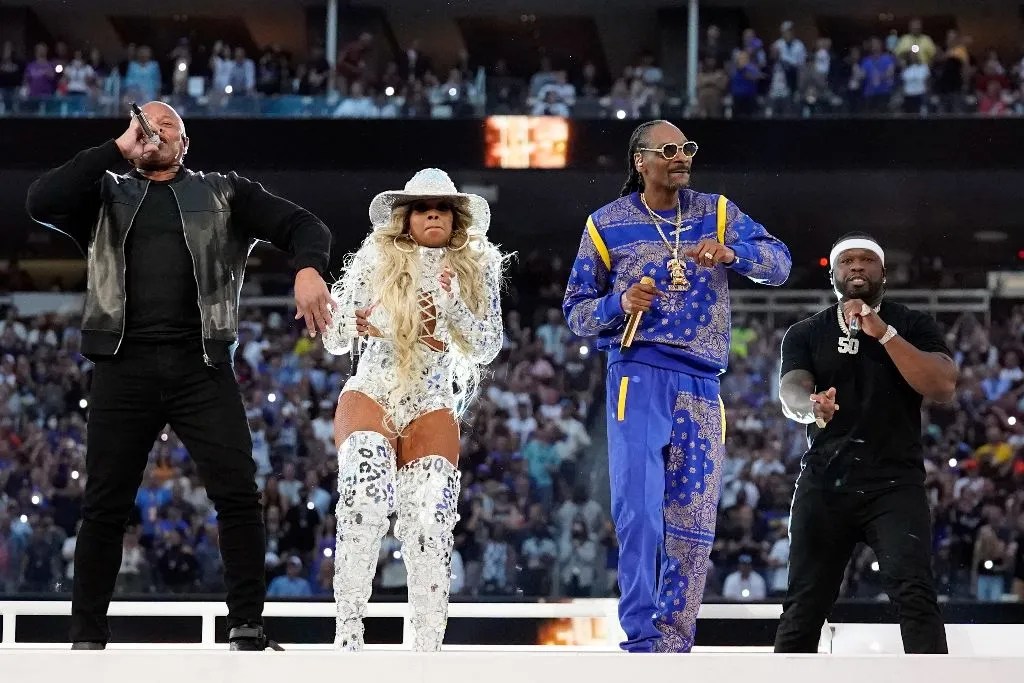
Snoop Dogg’s blue and gold outfit brought to mind, yet again, the importance of place, since those are the LA colors. That it was a bandana tracksuit also highlighted two trends that have long had a place in black sartorial history. Mary J. Blige’s outfit was patterned to look like a snow leopard, thereby referencing jazz bandleader Cab Calloway’s dramatic style (Vogue); but like Snoop Dogg’s bandana print, leopard print also has a long sartorial history viewers could immediately connect to. Moreover, the leopard spots looked like the squares on disco balls, thus referencing yet another predominantly black musical genre– a genre that, in fact, gave birth to rap and hip hop.
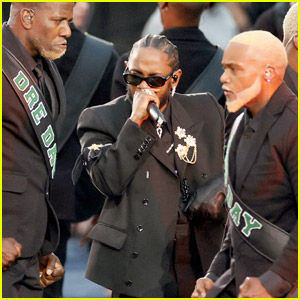
Dr. Dre and 50 Cent’s plain black outfits fit with the Hurston/Ligon concept, the black clothes emphasizing the blackness of the performers, especially in the stark white setting. The black suits worn by Kendrick Lamar and his backup dancers were imbued with more historical and cultural meaning, though. The crisp black suits worn by the lines of black men at angular attention reminded me of Louis Farrakhan and his Nation of Islam bodyguards (a reference very rooted in ’90s LA, like a lot of the Halftime show), but also of Malcom X. The suits were all black, they wore black sashes with green lettering, and their hair and beards were all dyed the same shade of blond: in other words, they wore black, green, and gold, the colors of Pan-Africanism. The colors seemed almost heightened by the fact that they were being worn in February, Black History Month. The only Pan-African color not displayed was red, which traditionally represents blood, either “the noble blood that unites all people of African ancestry” (per Marcus Garvey) or the blood spilled by conquerors and enslavers. Though the red was not on display, blood was very much present in other ways.
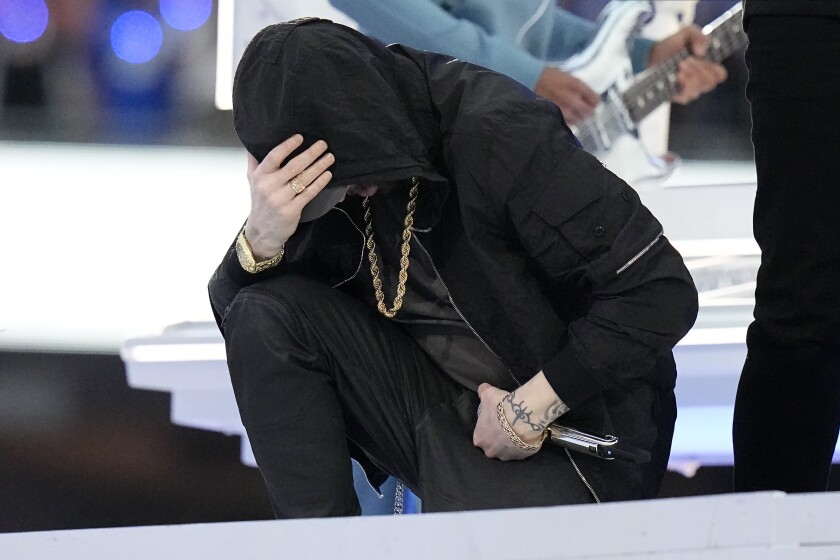
Eminem, and the dancers on the ground during his set, all wore hoodies with the hoods up. The backup dancers on the ground were all people of color, though, and Eminem was noticeably white. The hoodies have been a sartorial shorthand for the #BlackLivesMatter movement ever since the shooting of Trayvon Martin. The hoodies made it impossible not to think of Trayvon Martin when Eminem sang, “you only get one shot.” However, that Eminem was a white man in a hoodie prompted the question: in that situation, would he be viewed in the same way as the hooded backup dancers? #BlackLivesMatter was, of course, also centered in Eminem’s set through his much-discussed kneeling, which referred to Colin Kaepernick kneeling during the national anthem at NFL games to raise awareness for the movement. The kneeling prompted a similar question: was Eminem being viewed in the same way as Kaepernick?

Finally, the prison uniforms. The way the prison-industrial complex disproportionately affects people of color is a well-documented fact. Having dancers in prison uniforms amidst this celebration of blackness felt, in some ways, like a simple statement of fact: as they are currently configured, prisons are an inherently black space. Coming after Eminem’s explicitly political number, though, the prison uniforms also read as activism, as a call for prison reform, and for reform of the whole system that funnels people of color into prisons. The issue is especially urgent in the current pandemic, when overcrowding and inadequate healthcare are combining with horrifically fatal results.

There was an evolution, then, in the performers’ clothing, from a celebration of black fashion to overt activist messaging, with Kendrick Lamar’s set, and the way his backup dancers both drew on the history of black fashion and used it as a tool for explicit political speech, as the turning point.

And Yet…
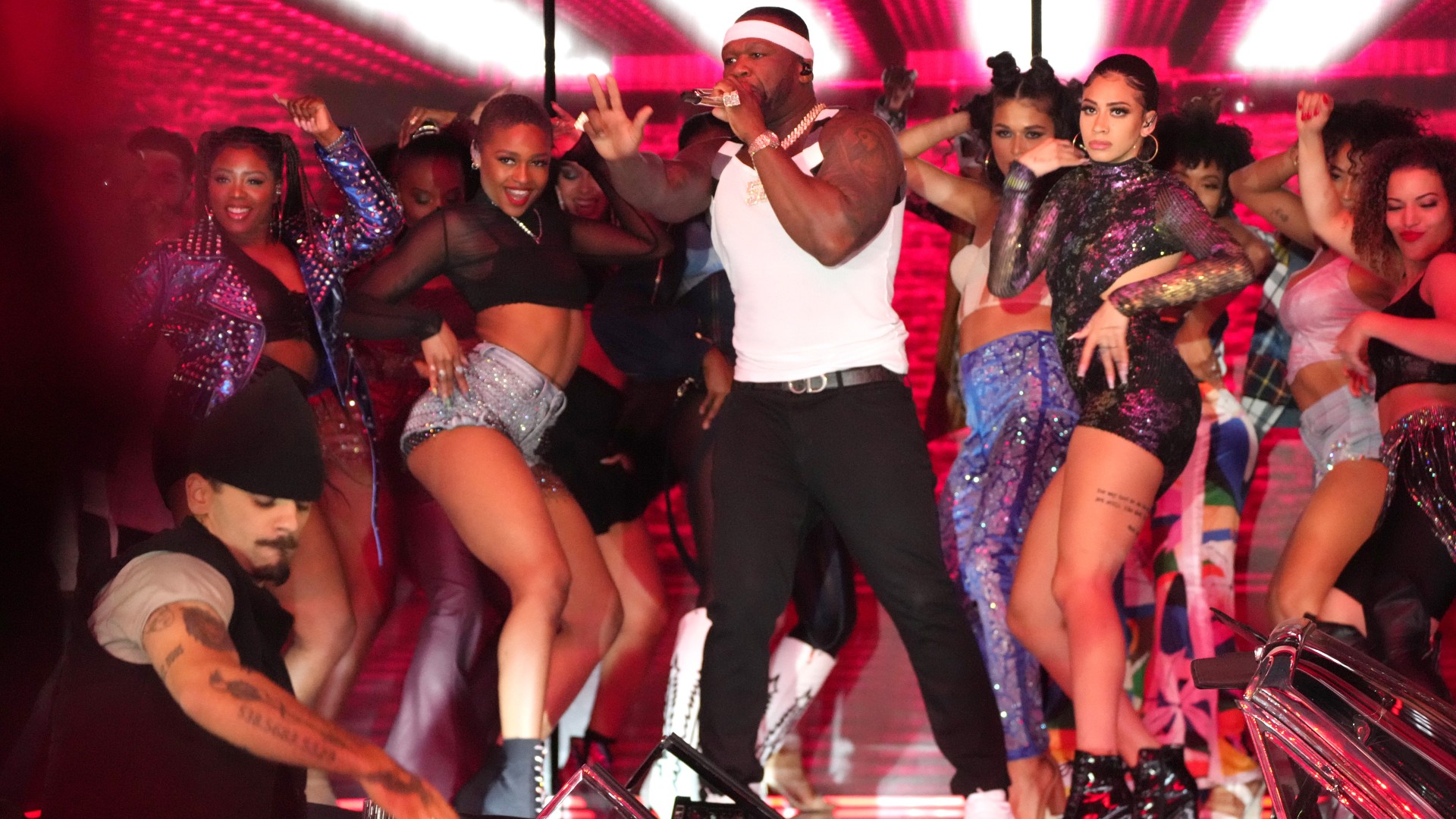
Amidst this exuberant demonstration of black excellence and activism, I did find 50 Cent’s choreography and staging problematic. I understand that it was referencing the original music video, and, as should be clear from the rest of this post, I applaud acknowledgements of history, especially histories that have been sidelined or under-appreciated. But 50 Cent’s Halftime performance was not so much a nod to the original video as a reproduction of it… all of it, including the overly sexualized women grinding all over him. Twenty years have elapsed since In Da Club first appeared, twenty years in which the participation and role of women in rap and hip hop has been discussed, addressed, and in many ways improved. 50 Cent’s set made it look as if #MeToo never happened, R. Kelly’s trial never happened, as if many women hadn’t come forward talking about their mistreatment on music video sets in the 90s and aughts. All of the other artists during the Halftime show updated their staging, so that their music gained new relevance and better reflected the current moment. They managed to raise new issues and questions with their staging; 50 Cent’s, in contrast, felt static.

This is far from an exhaustive analysis of 2022 Halftime show. That’s exactly what made it so great– it was so full of layers and meaning that it’ll take a long time before it’s fully unpacked. I also want to acknowledge my own position as a white woman: I’m far from the ideal person to be unpacking all the references made. But a quick Google of “Halftime 2022” doesn’t even begin to scratch the surface, a surface which is very much worth delving into, which is why I’ve done so. I hope others will do so more, and better, in the future.
Guns, Freedom, and the ‘Rona

A few weeks ago, when discussing how the current pandemic would be remembered, I posited my theory that, at some point, we would start comparing coronavirus to Oklahoma City, Waco, and Ruby Ridge. My thinking was a vaguely mathematical extrapolation: in those days, we were comparing coronavirus to 9/11 (see my last post). Immediately after 9/11, the attacks were being compared to the Oklahoma City bombing (see Marita Sturken’s excellent book on the subject, Tourists of History). If a=b and b=c, then surely a=c, and at some point we would start comparing the coronavirus to the Oklahoma City bombing.

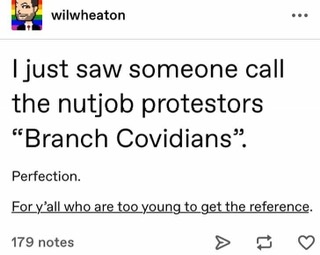
On April 19, NPR published a piece titled, “On 25th Anniversary of Oklahoma City Bombing, Officials Find Lessons for Today.” The piece is an attempt to bring together these fairly disparate traumatic experiences, drawing parallels between the “dehumanization” at the root of both the bombing and the pandemic. On April 20, a friend shared the following image on Facebook:

8FD5BC6F-828B-4DBC-BF15-A4AC94A03A8D“For y’all who are too young to get the reference,” the Branch Davidians were a religious sect living on a compound just outside of Waco, Texas, which was besieged by the ATF and FBI in 1993. Waco was a thorny, murky muddle of political issues– the Second Amendment, the right to property, individual liberty, the limits of federal power… Waco was also cited by Timothy McVeigh, one of the Oklahoma City bombers, as the impetus for his attack. The reference to “Branch Covidians” is thus a similar move to NPR’s, drawing parallels between those earlier related events and the current coronavirus.

Whereas the previous logic of my hypothesis was more mathematical, and while I am wary of drawing comparisons between events (like Sontag, who warned that our understanding of disease gets obscured and influenced by our metaphors for those disease, I fear that comparisons will obscure and influence our perceptions and understandings of the pandemic), as the weeks and social distancing have dragged on, the more I see this particular comparison as an apt one. More than simple geographic proximity, such as New York being the epicenter of both 9/11 and the coronavirus, the same ethical and political issues seem to be at play in Waco/Oklahoma City and our current moment.

In late March, for example, as the pandemic was starting to spread throughout the US and states were beginning to issue shelter-in-place orders, there was a run on guns and ammunition, with many people rushing to stockpile before going into isolation. There was also debate about whether gun stores were considered “essential businesses” and whether they should be allowed to remain open during the pandemic in the way that groceries, pharmacies, and the like were. The Second Amendment, and the question of how many, and what kinds of, guns people are allowed to own was also at issue in the early ’90s in the cases of Ruby Ridge, Waco, and Oklahoma City. In all those cases, too, the Second Amendment was tied up with a dark element of white nationalism, specifically Christian white supremacy. So too this current moment, with white nationalists exploiting the chaos of the coronavirus to promote conspiracy theories online and to foment plans for mass destruction (one white supremacist was arrested for planning to bomb a hospital treating coronavirus patients, while others have been discussing plans online to “weaponize” coronavirus). Christian fundamentalism is also playing a huge role in the spread of the coronavirus– Liberty University, an Evangelical school, is one of the only schools that reopened after shelter-in-place orders were issued, allowing for coronavirus to spread among its student population. Evangelical leaders were also the ones who encouraged President Trump to downplay the threat of the virus, leading to delays in federal response and increased spread of the virus at the beginning of the year.

And of course, in all these cases is the question of individual versus collective liberty. Can the government compel us to leave our homes, as they did at Ruby Ridge and Waco? Can it compel us to stay in our homes, as it’s doing now with the coronavirus? The “Branch Covidians” that Facebook post referred to are protesting lockdown orders, arguing that it’s un-American to force someone to stay indoors if they don’t want to.

Despite my wariness of drawing comparisons, I think there’s an important point to be made about the particular kind of home-grown American anger at work in all these cases. It’s a fury directed at the federal government, fueled by white supremacy and Christian fundamentalism, that finds its expression in moments of perceived government overreach. Though Ruby Ridge, Waco, and Oklahoma City have largely been relegated to footnotes in our national history, overshadowed by the events of 9/11, I think they continue to have an enormous impact on our collective psyche, especially since the issues at their root were never, in fact, resolved. Second Amendment rights continue to be debated today, as is religious freedom. Far from being a distinctly separate event, I would even argue that our response to the coronavirus is an extension of our response to Ruby Ridge, Waco, and Oklahoma City, a continuation of that unresolved and ongoing debate. Thinking of the pandemic in those terms may illuminate how we should respond to it, and of the dangers it presents that we may not even yet be aware of.

Compare and Contrast

In the college literature courses I teach, I often advocate for students to use a “compare and contrast” structure for their papers. It’s easy–elementary, in fact–but also surprisingly complex. The simplistic format allows students to tease out the more complex nuances in the texts. As the professor, I’m always acutely aware that this format only allows them to scratch at the surface, but it does afford them a firm grasp of that surface. There’s always much, much more to the texts than they ever see, but they do get the most essential points.

Which is why I understand why “compare and contrast” is the format we’ve reached for to understand our current situation, especially in New York. Comparing Coronavirus to 9/11 is an easily executed way of wrapping our minds around what’s happening. For the things that are comparable, it affords us the comforting knowledge that we’ve experienced these things before and survived. For the things that contrast with our previous experience, the contrast allows us to see them more clearly, to put them in perspective, to focus our anxiety on them, as the real things beyond our experience and control.

As an academic, though, and as one who studies literature of 9/11, I know that “compare and contrast” falls woefully short of capturing the full scope of the experience. Take, for example, the attention given to emergency response to both crises. They’re easily comparable, because they involve the same people, the same settings. Comparing them reassures us that we are again doing all the right things: New York’s Office of the Medical Examiner is yet again deploying mobile morgues, as it did after 9/11, allowing us, in both situations, to treat the dead with dignity and individuality. Comparing the events also allows us to see the contrasts: in 9/11, ERs and hospital staff waited for an influx of patients that never came, while during COVID-19, those same people and spaces are overwhelmed with an influx of patients far greater than what was anticipated. After 9/11, there was a swarm of people volunteering to donate blood that was not in fact needed; during COVID-19, there isn’t enough blood to go around.

Little attention is given, though, to other aspects of the events, the more slippery ones that don’t neatly fit into the “compare and contrast” model. There’s something similar, for example, in how both events involve planes, and travel, and the failure of bureaucratic systems to keep the threat out of the country. There should have been stronger security checks before 9/11, more stringent screening of the terrorists and their baggage. There should have been stronger medical screening for Coronavirus, a more systematic deployment of tests for travelers arriving at airports, whether or not they displayed symptoms. But even in this situation, despite the apparent comparability, it’s not a neat comparison. 9/11 involved evil people, intent on committing harm, whereas COVID-19 involves innocent civilians, often unaware themselves of the danger they carried. The hijackers entered America intent on sowing death; those infected with Coronavirus often entered America so as to avoid it, fleeing the pandemic that had already spread elsewhere.

After 9/11, there was a deployment of patriotism and American symbols. It was an obvious response to an attack on our nation motivated by hatred of our institutions and our way of life. The Coronavirus is seeing the deployment of those same symbols. The Upper West Side brownstone I live in, as well as several other buildings on my block, is festooned in American flags and red, white, and blue banners. This patriotism in some ways makes sense, since adherence to a larger cause, and a larger community, is comforting, and this same symbolism did offer solace after 9/11. But in the Coronavirus context, patriotism also makes little sense. The virus isn’t attacking us because we’re American, and America is far from the only nation affected. In fact, we aren’t even going to solve this crisis by retreating into America, isolating ourselves from the rest of the world. We need all scientists, all doctors, no matter their country, to be working towards a vaccine. In this case, the “compare and contrast” model may not only be obscuring the larger story, but it may also be actively preventing the situation from being resolved, forcing us to see things through a narrow, incorrect perspective.

Similarly, one of the indelible images from 9/11 was President George W. Bush sitting for a full seven minutes after he had been informed that a plane had struck the North Tower of the World Trade Center, continuing to read “The Pet Goat” to a classroom of second graders, as if nothing had happened. That federal, and specifically presidential, inertia is echoed by our current crisis: President Trump denying, for months, that America was affected, and stalling, even now, the federal response to the pandemic. But again, the comparison isn’t neat. Despite the egregiousness of Bush’s immediate response, there’s still a component of shock and disbelief. The delay was perhaps not so much callous as human, a simple attempt to process what was happening. Trump’s response, though, is entirely callous and self-motivated, prompted entirely by his own ego, his desire to brag about the continued success of the economy, his refusal to concede failure, and his desperation to clinch re-election.

All this to say that there are points of similarity between 9/11 and the current pandemic, especially in New York, which has been the most affected by both disasters. However, the “compare and contrast” model, while useful, has its limitations. The full scope of the Coronavirus, and its ultimate effect on our culture and society, has yet to be seen. Those effects will almost certainly prove to be unique, utterly distinct from anything we have experienced before. The comparison to 9/11 may help to tease some of them out, and may even be shaping our response to the current crisis, but hopefully they will not obscure some of the more unique facets of the current moment, either.

On Insomnia and Re-Reading

I have long believed in the joys of re-reading. My favorite Nabokov quote, which I invariably cite to my students every semester, is, “The only good reader is a re-reader.” I always cite it as proof that texts always contain hidden layers and meanings that only become apparent with subsequent readings, and as incentive for students to attentively re-immerse themselves in words they think they know. However, it’s taken on a new meaning for me in the last three weeks or so as I’ve struggled with acute and apparently chronic insomnia.

I’m under no delusion that my insomnia is entirely due to the fact that I am a graduate student, now in my fifth year of study, in the process of writing my dissertation. Dissertation writing is an incredibly isolating process, where you’re left for long stretches with nothing but a blank page and your brain, which, in those long, lonely periods delights in allowing your worst self-doubts to run rampant. As I approach the end of my funding package, and have to consider how to pay for what will hopefully be my last year of graduate school, my brain now has new thoughts to torment it, about what the future will hold, and whether all this education has been worth it.

In an attempt to quell these thoughts and lull my brain to sleep, I’ve been reaching for books, which I read in my dimly-lit living room, sometimes accompanied by my cat. Rather than using those many hours to catch up on dissertation reading, though (those books already take up every waking hour, I’ll be damned if they have my half-awake thoughts as well), I’ve been cozying up with old friends like Sara Crewe, Anne Shirley, and Alanna of Trebond. I hoped, at first, that they would be “easy reads,” that the familiarity of the texts, and the lower age of their intended audience, would facilitate exhaustion. Eventually, though, and true to Nabokov’s adage, I found something new in them.

I’d always been attracted to those heroines because of how deeply I related to them. I identified with their fierce outspokenness, but, like them, often felt crippled by my own weirdness or outcast state (I think this is why I’ve never loved Jo March quite as much as the women I encountered in other books– however ahead of her time she was, she was always held safe in the cocoon of her family, and never really made to feel alone or ashamed for being who she was). I found, in the quiet dawn hours, that my fellow-feeling for these women was just as acute as it had been in my youth, if not more so. I admired their gumption, their willingness to reach out and manifest whatever future they had envisioned for themselves, as well as their profound optimism, and their (almost) unwavering sense of hope. When I read those books as a girl, it was with an eye towards the future, viewing these women as models of what my life could and should look like. Now I look back to them, as torchlights of what I have lost.

It’s easy, during the long slog of graduate school, to lose sight of one’s sense of purpose, and then one’s sense of hope. The end seems both too near and too far: the dissertation will never be finished, and yet the funding will soon run out, and one will be thrust unceremoniously back into the real world, without ever having accomplished what one set out to do. One feels both incredibly old and unspeakably young, worn by the many years of thankless work, and yet acutely aware of how little one knows about the thing one is supposedly an expert in (this is called imposter syndrome, and it gets worse the further into grad school you get, simply because the more you learn, the more you know about what you don’t know).

And even though I can’t sleep, I’m reminded to continue looking for the beauty in the small things; that a pond can be a Lake of Shining Waters, that every woman is a princess. I’m also reminded of the power of imagination, and its capacity to realize dreams; if Sara can imagine herself to be in a palace, I can imagine myself in a professorial office rather than in my bedroom, and if Alanna can be a knight, then I can be a Doctor of Philosophy. These books shrink problems back down to their correct size, so that instead of looming ominously over you, they retreat into corners, still lurking, but less frightening in the daylight. Adults need hope and guidance just as much as children, it seems, and graduate students especially so. Even if I’m not sleeping, at least it doesn’t feel like I’ve wasted these hours.

Of Multiculturalism and White Witches

Though I dutifully binged The Chilling Adventures of Sabrina the day it came out, it’s taken me a few weeks to verbalize my thoughts about it. I wasn’t quite sure at first what this newest iteration of the Sabrina comics was arguing; in my confusion, I read several pieces, including one that appeared in The Atlantic, which I now realize were incorrect and led my thinking astray.

The article in The Atlantic argues, more or less, that this Sabrina, rather than being a revenge fantasy in the vein of Buffy the Vampire Slayer, is about how women should use power once they attain it. Supposedly this makes the new Sabrina more palatable, because however powerful she might be, there are still ethical checks on her power. Nothing is as terrifying as the idea of a woman with unlimited power, apparently.

I struggled with that Atlantic article for a while before realizing that my real thoughts on Sabrina had absolutely nothing to do with the misogyny-tinged argument the Atlantic had made. Rather, what makes this newest imagining of Greendale great is exactly what the Atlantic writer disliked, its vision for unfettered, inclusive female power.

After rejecting the Church of Night and refusing to sign the Book of the Beast, Sabrina is offered what her lawyer describes as “a type of dual citizenship”: continued attendance at the mortal high school, as well as mandatory magical education. That notion of dual citizenship is the central struggle of the series: how to balance the demands of two cultures, each equal components of Sabrina’s identity. The series argues again and again that she is neither one nor the other, but emphatically both. Her attempt to save Tommy Kinkle is one of the most cogent examples of this: she can bring his body back from the dead because she is a witch, but can also (try to) bring his soul back because she is a mortal, and thus can enter the mortal limbo to which his soul has been banished. Sabrina the Teenage Witch was about the misadventures of a witch in a mortal high school; The Chilling Adventures of Sabrina is about a girl trying to navigate the conflicting demands of her dual identity.

The show’s depiction of multiculturalism struck a chord with me. I’m German-American, with dual citizenship, and I attended a French high school. Each of these is an essential component of my identity, but they are often in conflict. In Europe I feel too outspoken and individualist, but in America I feel judged for my continental social mores. I’m both too much and not enough: too American, and yet not wholly American; too German, but also not German enough.

I imagine Sabrina’s situation struck similar chords with other immigrants and children of immigrants. When you leave your country behind, you don’t leave your culture; it stays with you, even as you assimilate, making bits and pieces of the new culture yours, too. The new Sabrina looks in many ways like the new America: the owner of multiple identities, all of which she is equally proud of and holds equally dear. Her reticence to sign the Book of the Beast is a reticence to abandon one of her identities; it is a refusal to assimilate. Her dual identity is what makes her special and unique, something Sabrina and the show celebrate, just as immigrant cultures should be celebrated rather than tossed aside. It is a poignant message in our current political climate.

However, the Church of Night doesn’t only forbid Sabrina from maintaining a dual identity; it also forbids women from having power on their own terms. In order to access power, women must promise their undying service and devotion to a man, in this case Satan. Their power is conditional on participating in male-approved institutions and structures. They must sign away their names; their names, and identities, become contingent on his, like Madam Satan. Sometimes they must even give up their bodies in service to these male institutions, like the queen during the Feast of Feasts (note that it is always a witch being asked to sacrifice herself during the Feast, never a warlock). Witches’ power is thus great, but it is also constrained by male frameworks; to access that power, they are participating in their literal dehumanization.

The Atlantic claims that this newest iteration of Sabrina exists in a post-racial universe, in which questions of race are irrelevant. I would argue, however, that questions of race are very much at the forefront of the show. Witches, for example, cursed the women of the Walker family, like Sabrina’s friend Ros, to go blind. In other words, white women actively participating in and propping up a patriarchal system used their power to hurt black women– just like the white women who voted for Trump, Ted Cruz, and Brian Kemp, and the maternalists of the 19th and 20th centuries who claimed political power by exerting control over colonized peoples, and the suffragettes who claimed the right to vote at the expense of enslaved people. The Chilling Adventures of Sabrina is not, in fact, making an argument against unfettered female power; it is making an argument against white women using their power to enable patriarchy while simultaneously disenfranchising minorities.

The newest Sabrina is a radical character because she refuses to participate in a patriarchal system that demands subservience and monoculturalism. The show is not a revenge fantasy that imagines what women would do with power once they get it; it rightfully perceives that women already have power, and are too often misusing it. The show is in fact attempting to navigate real-world patriarchal institutions, holding up Sabrina and her friends as examples of the way forward, through multiculturalism and intersectionality.

The Witch Hunt is Here (at least on TV)

Witchcraft is everywhere on TV these days. Netflix’s much-anticipated new series is The Chilling Adventures of Sabrina, a dark reboot of the popular comic-cum-90’s sitcom; the CW has brought back Charmed, the tale of the witchy Halliwell sisters, while the latest installment of American Horror Story depicts a witch coven battling the Antichrist to ward off the apocalypse. Even shows that ostensibly don’t deal in the occult have managed to integrate it somehow: the latest threat in the Riverdale universe is a Satanic cult and a demonic gargoyle.

This sudden plethora of witchy content is no coincidence: it is an effort to address, through metaphor, today’s gender politics. Witchcraft is, after all, one of the oldest female metaphors, and continues to be one of its most apt. Witches, after all, are the embodiment of female power, while covens are vibrant manifestations of supportive, collaborative female friendship. Witches have historically and culturally been demonized (literally) because of how they undermine the patriarchy, proving that they are just as powerful as men (if not more so), and that they can form functional societies (covens) without men. Satan, on the other hand, is an explicitly male figure. Many depictions of witches represent them as servants of Satan because it would be impossible to conceive of women functioning without some type of male oversight or direction; all that female power has to be tempered somehow.

None of the current TV shows depict witches in thrall to Satan, though. Rather, they all depict witches fighting against Satan and his demons. In the pilot episode of the new Charmed, the sisters fight an ice demon who feeds off powerful women. The demon’s association with cold seems somewhat counterintuitive, given that Hell has culturally been associated with heat (“the flames of Hell”), but it is an apt association, given that, scientifically, men prefer colder temperatures than women do; cold office temperatures that cater to these male preferences have been proven to enhance male productivity while limiting that of women, as Cynthia Nixon pointed out in the lead-up to her gubernatorial debate. The demon’s use of cold can thus be seen as yet another method for sapping female power.

Amazingly, the new Charmed does not shy away from depicting female anger. In the original show, the Halliwell sisters were often afraid, often running away from demons, and sometimes even from their own powers. Though they were powerful, that power was tempered by a posturing of ladylike demureness; they saved the world, but only after first pretending to be damsels in distress. In the new show, the sisters are ANGRY. They don’t run away from the patriarchy, they yell at it. For women who have spent years catering to accepted notions of how female bodies should exist in the world (don’t be too shrill, don’t be too opinionated, don’t be too emotional, don’t be too demanding but don’t be too independent either, etc., etc., etc.), the raw venting of anger depicted in the new Charmed is unbelievably refreshing. And it is especially appropriate at a moment in politics and history when female rage is boiling over.

In American Horror Story, the coven is literally battling the Antichrist for the future of humanity. The current season deals with the gender politics of the Trump era far more adroitly than the last one did, even though the last season worked the election explicitly into the narrative. After all, to bring on the apocalypse, the Antichrist harnessed the rancor of warlocks bitter about their position at the bottom of the witchy power structure; the warlocks were only too happy to throw in their lot with a boy with a proven capacity for evil, all in hopes of overturning the hierarchy and putting men on top.

Though Riverdale is famously soapy, its plot lines infamously far-fetched, the Satanic cult it currently depicts is perhaps the sanest plot the show has ever developed. The entire last season was spent demonstrating how wealthy and influential Hiram Lodge, literal patriarch of the Lodge family, controls all the levers of power in Riverdale, which he shamelessly manipulates for his personal gain. The teens’ quest to unearth and expose the Satanic cult parallels their struggle with Hiram Lodge and the patriarchal system that has oppressed and displaced disadvantaged groups in the town (like the residents of the impoverished South Side). It should be noted that when Betty first witnesses the cult’s satanic rituals in action, her mother and sister respond by gaslighting her, trying to convince her that it was all a hallucination brought on by stress. Their reaction demonstrates the complicity of white women, and the crucial role they play in maintaining and perpetuating the patriarchy (Alice and Polly, after all, are relentless in their efforts to recruit Betty into the cult).

These shows are thus not only unified in content, they are unified in message: we are at war with a patriarchy that seeks to oppress the weak, appropriate the power and talents of others, and destroy the world (hello climate change). Women, however, will save us, through their rage, their power, and their friendship. To quote the indomitable Lindy West, the witch hunt is here. I am a witch, and I am hunting you.

On Teen Rom-Coms

There has been a recent spate of romantic comedies, most of them produced by Netflix. The most popular are three aimed at teenage audiences: The Kissing BoothTo All the Boys I’ve Loved Before, and Sierra Burgess is a Loser.

I am a fan of the romantic comedy genre. In a medium often dominated by male stories and perspectives, romantic comedies have ironically been rare examples of films that successfully pass the Bechdel Test (works that have at least two named female characters who talk to each other for at least two minutes about something other than a man). Because it is a genre aimed at women, female friendships often figure fairly prominently in the narratives, and conversations about something other than the male love interest, such as about work or family stress, do occasionally occur.

Of the three aforementioned movies, however, one stands out for its fairly egregious flouting of the Bechdel Test. The Kissing Booth only features four named female characters. Aside from the protagonist Elle, the other three are only named once, in passing, their names quickly forgotten, their individual identities subsumed by their group one, “the OMGs,” aka the popular mean girls clique. Every one of Elle’s conversations with these girls is about how she can convince her crush Noah to participate in the eponymous kissing booth. Even Elle’s conversations with her unfortunately anonymous female mentor (played by Molly Ringwald) are woefully male-centric: the emotional heart-to-heart between Elle and her surrogate mother figure centers entirely on Elle’s relationship with her best friend Lee and her love interest Noah. More problematic than the pervasive focus on men, however, is the vision the movie presents for male-female relationships. The way Noah displays his affection for Elle is by attempting to control her actions, dictating how other men may interact with her, what social situations she may participate in, and even how she may dress. Even her best friend exerts control over her, dictating who she may and may not date, and making that an explicit part of their friendship pact. Even though Elle supposedly exerts her own agency by occasionally behaving contrary to the mandates of the men in her life, hers is an existence largely delineated and defined by the whims of the men around her.

Sierra Burgess too presents problems. It does offer us a delightfully complex vision of female friendship: Veronica and Sierra’s friendship is far from perfect, marred with jealousy and cruelty, but it also displays moments of radical empathy and women helping women. The contradictory nature of their relationship is ultimately what makes it feel so real, and ultimately so relevant to its target audience (the throes of teenage angst, after all, often lead to discrepant behaviors ranging from the profoundly kind to the outright cruel). However, the movie botches its treatment of its central problem: the treatment and position of fat girls. Jamey’s supposedly swoon-worthy remark to her is that she may not be everyone’s type, but she’s his type, ultimately foreclosing her capacity for beauty. The movie’s conclusion is that Sierra’s beauty is conditional on finding someone who happens to find her physical appearance acceptable. Although this conclusion is true for everyone, regardless of physical appearance (skinny girls like Veronica aren’t actually a universal type), the movie frames it as only being true for fat girls. Only fat girls have a limited range of suitors, whereas skinny girls have their pick. It reinforces a false privilege for some, while reinforcing a false inferiority for others.

I have an unfettered admiration for To All the Boys, though. It has so many great moments of female friendship: between Lara Jean and Kitty (when they talk about her driving skills and social life), between Lara Jean and Margot (when they talk about Margot’s expectations for college and Lara Jean’s lack of communication while Margot was abroad), between Lara Jean and Chris (when they talk about Gen’s bullying and Lara Jean’s awesome style). And unlike Elle, Lara Jean has undeniable agency throughout the entire movie: she sets the terms for her relationship with Peter, literally drawing up a contract to that effect, delineating what physical contact she’s comfortable with, and even ending the relationship when it doesn’t stand up to her expectations. And, of course, the movie is refreshingly diverse, dealing adeptly and compellingly with Lara Jean’s multi-ethnicity, such as when her father attempts, however ineptly, to keep his daughters’ Korean heritage alive.

While I’m thrilled that Netflix has decided to reboot the rom-com genre, they should be conscious of their audience while doing so. They should strive to avoid the dangerous failures of Kissing Booth and Sierra Burgess, lest they set teenage girls up for abusive relationships (which Elle’s undeniably is) and negative, even harmful self-image (it should be noted that Netflix is already failing to accomplish this, as they have renewed Insatiable, a show whose awfulness is described in painfully astute and accurate detail by the wonderful Roxane Gay). They should instead seek to promote heroines like Lara Jean, who are flawed but self-aware agents of their own lives. They should represent the kind of girls they want to see in the future, girls who are strong, diverse, and responsible for their own choices.

To that end, Netflix should bring back Everything Sucks.

Security, National Identity, and Global Warming

In her book “Tourists of History,” Marita Sturken argues that American national identity is founded on twin notions of innocence and security. America is the perpetual innocent victim of outside threats; to preserve the nation (and its state of innocence) we must protect ourselves from those external forces of evil. Since World War II, a large part of how we protect ourselves is through the domestic sphere, aka through consumerism. Americans participated in the war effort by growing victory gardens and recycling their aluminum; after the war, they displayed their patriotism by purchasing military technologies adapted for domestic use, such as aerosol cans and, in today’s world, Hummers. As Sturken aptly points out, “there is a deep alliance between the practices of consumerism and the practices of patriotism.”

An uncomfortable truth in today’s world is that those very consumer practices are now contributing to our insecurity. Our consumption of plastic and fossil fuels has led to climate change that may soon be irreversible. And yet, despite the obvious and ever-increasing environmental threat, our consumer practices show no signs of slowing. After all, climate change or no, buying things is the quintessential display of patriotism: “Buy American.”

I wonder if perhaps an answer to marshaling the consuming naysayers in service of environmental protection has been staring us in the face this whole time. Climate change is an outside threat, America its victim (not an innocent victim, but as Sturken argues, our innocence has always been a performance, never a reality). As with all other crises, Americans can protect themselves from this threat through their domestic consumption. We can purchase products made with bamboo instead of paper fibers; we can purchase metal straws instead of plastic ones; we can purchase tote bags to bring our purchased groceries home in. Instead of framing eco-friendly consumer habits as “going without” (i.e. limiting our use of plastic), frame it as using our purchasing power to bolster a patriotic vision of the nation (i.e. America safe from the threat of climate change).

The Obama administration seems to have realized this method of altering consumer habits. They were, after all, “investing in new and developing technologies” such as solar and wind, not going without coal and other fossil fuels. Despite the current administration’s unwillingness to address environmental and scientific realities, we could proliferate this new framework ourselves. Perhaps, by refocusing the behaviors that got us here in the first place, we can save the planet.


OITNB, #BlackLivesMatter, and Orlando

Season 4 of Orange is the New Black grappled very explicitly with the Black Lives Matter movement. It appeared everywhere, from the black inmate being crushed under an officer’s knee so that she couldn’t breathe, to one inmate calling out that the warden wouldn’t “say her name” in the press conference, to a third (black) inmate pulling up her hood as they prepared to riot.

Of course, that’s what everyone will be talking about: how OITNB dealt with Black Lives Matter, how they tried to flesh out the unalterable consequences of combining a bloated corporation out for its own profits and animalistic, power-hungry prison guards. But that’s not what I want to talk about. I don’t even want to talk about how yet another lesbian TV character got killed off. I want to talk about Orlando.

The show seemed to argue in the last two episodes that events like death by police brutality, while horrific, don’t matter as much as their aftermath– that’s why the season didn’t just end with Poussey’s death. Everyone’s responses to her death, from her friends and the other inmates to the guards and the corporate yuppies, mattered as much as the single event that precipitated them. Terrible things happen in the world; but what marks them as either truly horrifying or moments of exultant humanity is not the events themselves but how we as a society choose to mourn and act on them. We have an ethical responsibility to handle the aftermath of these events with care, consideration, and action. The quote that has been getting me through the last week echoes this sentiment: “Whenever terrible things happen in the news, look for the helpers. There will always be helpers.” The #BlackLivesMatter movement responded to horror with calls for justice and equality. After 9/11, we responded to hate and violence with kindness, coming together to both search and rebuild.

The last frame of the last episode was not the image that is usually shared of the black victim of police brutality; instead of the mugshot or the “gangsta-looking photo,” as Litchfield’s corporate overlords cynically dubbed it, the last image seared into our minds is that of Poussey smiling and free and embarking on her last, most promising adventure. That moment, so delicate, was as much a reaction to the aftermath as anything else that happened in that last episode. It was a defiant insistence that this is how we should remember her, in the moment when she was most herself, not when she was miserable or broken or however corporate PR tried to paint her. They repeated the word “human” and “person” a lot this season, mostly in relation to the inmates. And that’s what this last frame did: it demanded that Poussey remain a person, not a body or a symbol or an argument.

After Orlando, we need both the activist response of Black Lives Matter and the effervescent beauty of that last image of Poussey. We need to campaign against bigotry, wether it’s homophobia or Islamophobia; we need to fight for stricter gun laws; we need to act out against domestic violence. But we also need to appreciate the tender moments of pure humanity, like Titus Burgess singing “Somewhere” outside the Stonewall Inn, a single mournful note drifting out over a gathered crowd, or everyone who was vibrantly exultant, singing and dancing and voguing, at LA Pride.

OITNB meant to serve as a metaphor for the events of 2015; instead I think it became an eerily apt one for those of June 13, 2016. And so I would argue, as the show does, that the aftermath matters. Let’s make sure we write a good one for Orlando.

On Reading “Classic Literature”

It is an odd feeling to read classic literature for the first time. What I term classic literature is not necessarily an old text, but rather a work of fiction that is both old and canonical, whose plot you are intimately acquainted with even without looking upon its pages. Examples that immediately come to mind are Jane Eyre (you know that Mr. Rochester is already married to a madwoman), Madame Bovary (you know that at the end she drinks rat poison), and Anna Karenina (she throws herself in front of an oncoming train). That the examples that first came to mind all deal with women, and suicide, and adultery (I use that term loosely in the case of Jane Eyre) is a matter for another blog post.

It is an odd feeling to read classic literature because you at once do and do not know what will happen next. You have an odd sense of foreboding, in that you know exactly what will happen to the characters, even before they do. And yet you have no idea what will happen, because the words are new, and the way in which those events unfold, and with what arresting turns of phrase, is as yet unknown to you. In that sense, you are not unlike the author: you know where you are going, and yet the precise route you will take to get there remains unknown, shrouded in layers of editing.

And the sensation of reading classic literature for the first time is distinct from re-reading a text you have previously read. In that circumstance, it’s almost like you’re returning to an old friend. You caress certain words, amazed that they still hold relevance and beauty for you; you linger over certain details, certain facets of character that are only just revealing themselves to you, now that you are looking on with older and wiser (or at least more experienced) eyes.

I don’t know what I want to say about the sensation of reading classic literature, only that it is a peculiar sensation that only a few books are capable of eliciting, and that it is a not altogether unpleasant experience, especially once one is aware of it.